OEM Tools Compression Tester Kit
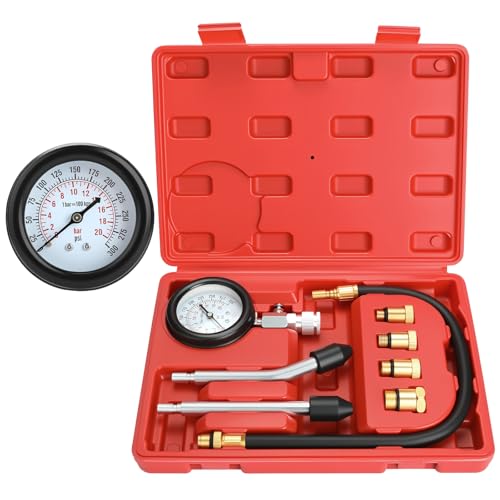
OEM Tools 24418 Professional Compression Tester Kit
Complete compression testing solution featuring 0-300 PSI gauge, multiple thread adapters, and flexible hose assembly. Professional-grade construction ensures accurate readings for gasoline engines up to 18mm spark plug threads.
Key Features:
- 0-300 PSI dual scale gauge
- 8 threaded adapters included
- 24-inch flexible test hose
- Quick-disconnect fittings
- Blow-molded carrying case
- Works on most gasoline engines
- Professional accuracy rating
- Durable brass construction

OEM Tools 24419 Master Compression Test Set
Advanced compression testing kit with extended adapter range and premium gauge assembly. Features reinforced connections and expanded compatibility for domestic and import vehicles with comprehensive diagnostic capabilities.
Key Features:
- Extended adapter set (12 pieces)
- Heavy-duty 0-300 PSI gauge
- 36-inch reinforced test hose
- Universal spark plug adapters
- Storage case with foam inserts
- Precision calibrated meter
- Chrome-plated fittings
- Import vehicle compatibility
Understanding Engine Compression Testing with OEM Tools Compression Tester
Engine compression testing represents one of the most critical diagnostic procedures in automotive maintenance and repair. The OEM Tools compression tester provides mechanics and DIY enthusiasts with the precision instruments needed to evaluate engine health accurately.
Compression testing measures the maximum pressure each cylinder can generate during the compression stroke. This diagnostic process reveals vital information about piston rings, valves, head gaskets, and overall engine condition that visual inspections cannot detect.
The OEM Tools compression tester kit includes specialized gauges, adapters, and hoses designed to work with various engine configurations. Professional technicians rely on these tools to diagnose engine problems before they become catastrophic failures, saving both time and money in the repair process.
Modern engines operate under precise tolerances, making accurate compression readings essential for proper diagnosis. The OEM Tools compression tester delivers consistent, reliable measurements that help identify worn components and potential failure points before they cause complete engine breakdown.
Essential Components of OEM Tools Compression Tester Kits
Every OEM Tools compression tester kit contains carefully selected components that work together to provide comprehensive engine testing capabilities. The pressure gauge serves as the primary measurement device, typically featuring dual scales for both PSI and metric readings.
Thread adapters form the crucial connection between the tester and engine spark plug holes. The OEM Tools compression tester includes multiple adapter sizes to accommodate different thread pitches found in domestic and import vehicles, ensuring universal compatibility across various engine types.
Pressure Gauge Specifications
The gauge assembly in an OEM Tools compression tester features a 0-300 PSI range suitable for most gasoline engines. The large, easy-to-read dial face includes color-coded zones that help identify acceptable compression ranges versus problematic readings.
High-quality gauges maintain accuracy through temperature variations and repeated use. The OEM Tools compression tester incorporates precision-calibrated instruments that provide consistent readings throughout their service life, essential for reliable diagnostic work.
Adapter and Hose Assembly
Flexible test hoses connect the gauge to the engine, allowing technicians to position the OEM Tools compression tester for easy reading while maintaining secure connections. Reinforced construction prevents kinking and ensures consistent pressure transmission from cylinder to gauge.
Quick-disconnect fittings enable rapid adapter changes between different cylinder configurations. This feature particularly benefits shops working on multiple vehicle types, as the same automotive service tools can adapt to various testing scenarios without compromising accuracy.
Proper Testing Procedures for Accurate Results
Successful compression testing requires following established procedures to ensure accurate and repeatable results. The OEM Tools compression tester performs optimally when proper preparation and testing techniques are employed consistently.
Engine preparation begins with warming the motor to normal operating temperature, as cold engines produce artificially low compression readings. Remove all spark plugs to eliminate compression in adjacent cylinders and ensure the throttle remains fully open during testing.
Pre-Test Engine Preparation
Disable the ignition system to prevent accidental starting during the compression test procedure. Most technicians remove the fuel pump fuse or relay to prevent fuel delivery while cranking the engine with the OEM Tools compression tester connected.
Clean spark plug threads thoroughly before installing the compression tester adapter. Debris or oil in the threads can cause inaccurate readings or prevent proper sealing between the OEM Tools compression tester and the cylinder head.
Cranking and Reading Procedures
Crank the engine for at least five to six compression strokes or until the gauge needle stops climbing. The OEM Tools compression tester requires sufficient cranking time to reach maximum pressure, as insufficient cranking produces falsely low readings.
Record compression readings for each cylinder, noting any significant variations between cylinders. Healthy engines typically show compression readings within 10-15% of each other, while larger variations indicate potential problems requiring further investigation.
Perform wet compression tests when low readings are detected by adding a small amount of oil to the cylinder. If compression increases significantly, piston ring wear is likely the cause, while minimal improvement suggests valve-related issues that may require additional diagnostic tools for confirmation.
Interpreting Compression Test Results and Diagnostics
Understanding compression test results requires knowledge of acceptable pressure ranges and the significance of various reading patterns. The OEM Tools compression tester provides the accurate data needed for proper engine diagnosis when results are interpreted correctly.
Typical gasoline engines produce compression readings between 120-180 PSI, depending on compression ratio and engine design. Consult manufacturer specifications for exact values, as some high-performance engines may exceed 200 PSI while others operate effectively at lower pressures.
Analyzing Pressure Variations
Uniform low compression across all cylinders often indicates worn piston rings, while isolated low readings suggest valve problems or head gasket issues. The OEM Tools compression tester helps identify these patterns through consistent, accurate measurements across all test locations.
Extremely high readings may indicate carbon buildup in the combustion chamber or incorrect valve timing. These conditions require additional testing beyond basic compression measurement to determine appropriate repair strategies.
Common Diagnostic Scenarios
Adjacent cylinders showing low compression frequently point to head gasket failure between those cylinders. This pattern requires immediate attention, as continued operation can cause severe engine damage that extends beyond simple gasket replacement.
Gradually declining compression over time indicates normal engine wear, while sudden changes suggest acute problems requiring immediate diagnosis. Regular compression testing with the OEM Tools compression tester establishes baseline readings for future comparison and trend analysis.
Combining compression test results with other diagnostic procedures provides comprehensive engine evaluation. Tools like vacuum pumps and cooling system testers complement compression testing for complete engine health assessment.
Maintenance and Care for OEM Tools Compression Tester Equipment
Proper maintenance ensures the OEM Tools compression tester provides accurate readings throughout its service life. Regular care and calibration checks prevent measurement errors that could lead to incorrect diagnoses and unnecessary repairs.
Clean all components thoroughly after each use, paying particular attention to threaded adapters that may accumulate oil and debris. Store the OEM Tools compression tester in its protective case to prevent damage and maintain organization of small components.
Gauge Calibration and Accuracy
Periodic calibration verification ensures continued accuracy of pressure readings. Professional shops often maintain reference standards for checking gauge accuracy, while DIY users can compare readings against known-good instruments.
Protect the gauge from excessive pressure that could damage internal mechanisms. Most OEM Tools compression tester gauges include over-pressure protection, but avoiding excessive cranking or connection to high-pressure sources extends instrument life.
Storage and Organization
Organized storage prevents loss of adapters and maintains kit completeness for future testing needs. The included case keeps components secure and provides quick access to necessary parts during diagnostic procedures.
Regular inspection of hoses and fittings identifies wear before it affects testing accuracy. Replace damaged components promptly to maintain the reliability expected from professional-grade testing equipment like the OEM Tools compression tester.
Consider the compression tester as part of a complete diagnostic toolkit that might include specialized equipment for coolant system testing and other engine-related diagnostics for comprehensive automotive service capabilities.
Professional Applications and Workshop Integration
Professional automotive shops rely on the OEM Tools compression tester for routine diagnostics and pre-purchase inspections. The tool’s accuracy and durability make it suitable for high-volume testing environments where consistent results are essential.
Integrating compression testing into standard diagnostic procedures helps identify engine problems early in the diagnostic process. This approach saves time by directing attention toward specific systems rather than pursuing broad troubleshooting strategies.
Fleet Maintenance Applications
Fleet operators use compression testing to assess engine condition during routine maintenance intervals. The OEM Tools compression tester provides the reliability needed for evaluating multiple vehicles on regular schedules without compromising accuracy.
Preventive maintenance programs benefit from trending compression readings over time to predict engine overhaul requirements. This data-driven approach optimizes vehicle replacement timing and reduces unexpected breakdowns.
Training and Skill Development
Technician training programs incorporate compression testing as fundamental diagnostic skill development. The OEM Tools compression tester serves as an excellent training tool due to its straightforward operation and clear result interpretation.
Experienced technicians understand that compression testing provides baseline information for more complex diagnostic procedures. Tools such as brake bleeders and harmonic balancer pullers complement compression testing in comprehensive vehicle maintenance programs.
Regular use of the OEM Tools compression tester builds diagnostic confidence and helps develop the systematic approach necessary for efficient automotive repair work.
Frequently Asked Questions
Investing in Quality Engine Diagnostics
The OEM Tools compression tester represents an essential investment for anyone serious about automotive maintenance and repair. Whether you’re a professional technician or dedicated DIY enthusiast, accurate compression testing provides invaluable insight into engine health that guides informed repair decisions.
Quality diagnostic equipment pays for itself through accurate problem identification and prevention of unnecessary repairs. The OEM Tools compression tester delivers professional-grade accuracy at a reasonable price point, making advanced engine diagnostics accessible to workshops of all sizes.
Regular compression testing establishes baseline engine performance data that proves invaluable for tracking engine health over time. This proactive approach to maintenance helps identify problems before they become expensive failures, extending engine life and maintaining vehicle reliability.
Choosing the right compression tester ensures years of reliable diagnostic service. The OEM Tools compression tester combines accuracy, durability, and ease of use in a comprehensive kit that meets the demands of modern automotive diagnostics while remaining accessible to users at all skill levels.