Manual Fluid Extractor – OEM Tools Pneumatic Fluid Evacuator Guide

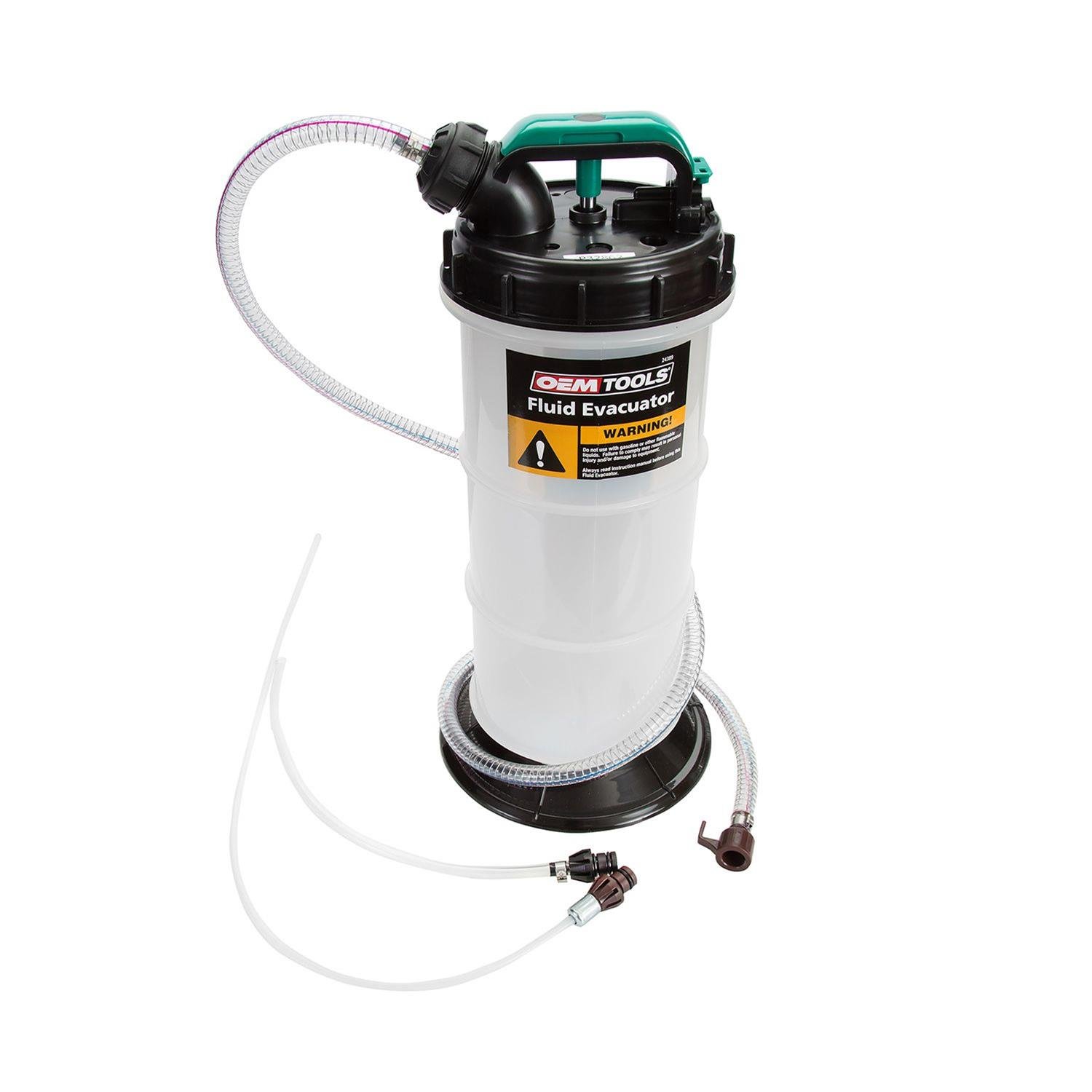
OEM Tools 24389 Manual Fluid Extractor
Professional 6.5-liter manual fluid extractor with hand pump operation. Features durable construction and multiple probe attachments for versatile automotive fluid extraction applications including oil, coolant, and transmission fluids.
Key Features:
- 6.5-liter extraction capacity
- Manual hand pump operation
- Multiple probe attachments included
- Clear fluid level viewing
- Durable polyethylene construction
- Universal dipstick tube compatibility
- Portable lightweight design
- Easy-pour spout with cap
OEM Tools 24388 Pneumatic Fluid Evacuator
Air-powered pneumatic fluid evacuator with 15-liter capacity for high-volume applications. Operates with standard shop air compressor for efficient fluid removal from engines, transmissions, and differential systems without lifting vehicles.
Key Features:
- 15-liter pneumatic operation
- Shop air compressor compatibility
- High-volume extraction capability
- Professional-grade construction
- Multiple extraction probes
- Pressure gauge monitoring
- Quick-disconnect air fittings
- Heavy-duty wheels for mobility
Understanding OEM Tools Manual Fluid Extractor Systems
The oem tools manual fluid extractor represents a revolutionary approach to automotive fluid maintenance, eliminating the need for traditional drain pan methods and vehicle lifting. These innovative systems extract fluids through existing openings like dipstick tubes, providing cleaner and more efficient service procedures.
Manual fluid extractors operate using vacuum pressure created by hand pumps or pneumatic systems. The oem tools manual fluid extractor lineup includes both options to accommodate different shop requirements and volume needs.
Professional technicians and DIY enthusiasts alike benefit from the versatility these tools provide. From engine oil changes to transmission fluid replacement, the oem tools manual fluid extractor simplifies maintenance tasks while reducing mess and improving safety.
Key Components and Operation
Every oem tools manual fluid extractor features essential components designed for reliable performance. The extraction chamber stores removed fluids, while specialized probes navigate through dipstick tubes and filler openings to reach fluid reservoirs.
Vacuum generation methods distinguish manual from pneumatic models. Hand-operated units rely on manual pumping action, while pneumatic versions connect to compressed air systems for continuous operation.
Probe selection determines extraction compatibility across different vehicle systems. The oem tools manual fluid extractor includes various probe sizes and configurations to match specific applications and access requirements.
Manual vs Pneumatic Fluid Extraction Methods
Choosing between manual and pneumatic operation depends on usage frequency and volume requirements. The oem tools manual fluid extractor in hand-pump configuration excels in low-volume applications and mobile service scenarios where compressed air isn’t available.
Manual extractors offer complete independence from external power sources. Technicians can perform fluid changes anywhere without relying on shop air systems, making the oem tools manual fluid extractor ideal for field service and emergency repairs.
Pneumatic models provide superior efficiency for high-volume shops. These systems maintain consistent vacuum pressure throughout extraction cycles, reducing operator fatigue while handling multiple service appointments daily.
Capacity Considerations
Extraction capacity directly impacts workflow efficiency in professional environments. Smaller oem tools manual fluid extractor units handle standard passenger car oil changes effectively, while larger pneumatic models accommodate multiple services without emptying.
Frequent emptying interrupts service procedures and reduces productivity. Selecting appropriate capacity prevents workflow disruptions while ensuring complete fluid removal from vehicle systems.
Storage and portability balance against capacity requirements. The oem tools manual fluid extractor design optimizes both factors, providing maximum utility without compromising mobility or storage convenience.
Professional Applications and Automotive Service Integration
Modern automotive service departments integrate oem tools manual fluid extractor systems into standard maintenance procedures. These tools complement existing automotive service tools while streamlining fluid change operations across multiple vehicle types.
Engine oil extraction through dipstick tubes eliminates traditional drain plug procedures. The oem tools manual fluid extractor removes oil completely while vehicles remain on level ground, improving shop efficiency and reducing lift requirements.
Transmission and differential services benefit significantly from extractor technology. Many modern vehicles feature complex access requirements that make traditional draining difficult, where the oem tools manual fluid extractor provides practical solutions.
Coolant System Integration
Coolant system maintenance requires careful fluid handling to prevent contamination and ensure complete removal. Professional oem tools manual fluid extractor units work alongside specialized coolant system equipment to provide comprehensive service capabilities.
Radiator and overflow tank access presents unique challenges in modern vehicles. Extraction probes navigate these confined spaces effectively, removing old coolant without disassembly requirements.
System flushing procedures combine extraction with circulation methods. The oem tools manual fluid extractor removes contaminated fluids while fresh coolant replaces old fluid through normal filling procedures.
Brake System Applications
Brake fluid maintenance requires absolute cleanliness and complete old fluid removal. The oem tools manual fluid extractor provides contamination-free extraction when combined with proper brake bleeding procedures and professional service protocols.
Master cylinder access through reservoir openings allows direct fluid extraction. This method prevents brake system contamination while ensuring complete old fluid removal before fresh fluid introduction.
Technical Specifications and Performance Features
Engineering specifications define oem tools manual fluid extractor performance capabilities across different operating conditions. Vacuum pressure ratings, extraction speed, and component durability determine long-term reliability and service effectiveness.
Vacuum pressure generation varies between manual and pneumatic models. Hand-operated units typically achieve sufficient vacuum for most applications, while pneumatic versions maintain consistent pressure throughout extended extraction cycles.
Extraction speed depends on fluid viscosity, temperature, and access tube diameter. The oem tools manual fluid extractor optimizes these factors through proper probe selection and operating technique.
Probe Technology and Compatibility
Probe design directly impacts extraction efficiency and vehicle compatibility. The oem tools manual fluid extractor includes various probe configurations to match different dipstick tube sizes and access requirements across vehicle manufacturers.
Flexible probe materials navigate curved dipstick tubes without damage to vehicle components. Rigid probes provide direct access where straight-line insertion is possible, maximizing extraction speed and completeness.
Probe length determines accessible fluid depth within reservoirs and oil pans. Professional oem tools manual fluid extractor systems include multiple lengths to accommodate different vehicle designs and fluid capacities.
Construction Materials and Durability
Chemical compatibility ensures long-term reliability when handling various automotive fluids. The oem tools manual fluid extractor utilizes materials resistant to petroleum products, coolants, and brake fluids without degradation.
Sealing systems prevent vacuum leaks that reduce extraction efficiency. Quality construction maintains vacuum integrity throughout the operating cycle, ensuring complete fluid removal and consistent performance.
Component accessibility simplifies maintenance and repair procedures. The oem tools manual fluid extractor design allows easy replacement of wear components like seals and probes without complete unit disassembly.
Diagnostic Integration and Advanced Service Procedures
Modern vehicle diagnostics often require fluid analysis and system testing that benefit from clean extraction procedures. The oem tools manual fluid extractor supports diagnostic workflows by providing contamination-free fluid sampling and complete system evacuation.
Fluid condition assessment requires clean samples free from external contamination. Extraction methods prevent dirt and debris introduction that could compromise diagnostic accuracy when working alongside diagnostic equipment and analysis procedures.
System performance testing may require complete fluid removal followed by controlled refilling. The oem tools manual fluid extractor enables precise fluid management during diagnostic procedures and system validation testing.
Vacuum System Integration
Shops equipped with central vacuum systems can integrate pneumatic extractors for enhanced efficiency. These installations work similarly to dedicated vacuum pump systems while providing specialized fluid handling capabilities.
Vacuum pressure regulation ensures optimal extraction without damaging sensitive vehicle components. Proper pressure control prevents seal damage while maintaining sufficient suction for complete fluid removal.
The oem tools manual fluid extractor pneumatic models integrate seamlessly with existing shop air systems. Standard quick-connect fittings and pressure regulators provide plug-and-play installation without extensive modifications.
Specialized Tool Coordination
Complex repairs often require coordinated tool usage for comprehensive service procedures. The oem tools manual fluid extractor works effectively with specialized tools like harmonic balancer pullers during engine service operations requiring fluid removal.
Maintenance, Storage, and Best Practices
Proper maintenance ensures reliable oem tools manual fluid extractor performance throughout its service life. Regular cleaning, seal inspection, and probe maintenance prevent contamination and maintain extraction efficiency.
Cleaning procedures vary depending on extracted fluid types. Oil extraction requires different cleaning protocols than coolant or brake fluid removal, ensuring no cross-contamination between different automotive fluids.
Storage conditions affect component longevity and performance reliability. The oem tools manual fluid extractor requires clean, dry storage with proper drainage to prevent fluid residue accumulation and component degradation.
Operator Safety Protocols
Fluid extraction involves potential exposure to hazardous automotive chemicals. Proper safety equipment and procedures protect operators while ensuring efficient extraction and disposal processes.
Personal protective equipment requirements include chemical-resistant gloves and eye protection. The oem tools manual fluid extractor operation should include proper ventilation and spill containment measures.
Fluid disposal regulations require proper handling and storage of extracted materials. Professional shops must maintain compliance with environmental regulations while using oem tools manual fluid extractor systems.
Performance Optimization
Extraction efficiency improves through proper technique and equipment selection. The oem tools manual fluid extractor performs best when operated according to manufacturer specifications and recommended procedures.
Fluid temperature affects extraction speed and completeness. Warm fluids extract more efficiently than cold fluids, but excessive temperatures can damage extractor components and create safety hazards.
Regular performance verification ensures consistent results and identifies potential maintenance needs. The oem tools manual fluid extractor should undergo periodic testing to confirm vacuum generation and extraction capabilities remain within specifications.
Frequently Asked Questions
Choosing the Right OEM Tools Manual Fluid Extractor
The oem tools manual fluid extractor represents a significant advancement in automotive fluid maintenance technology, offering professional-grade performance in both manual and pneumatic configurations. These versatile tools eliminate traditional limitations associated with fluid changes while improving efficiency and reducing mess.
Selection between manual and pneumatic models depends on specific application requirements, usage frequency, and available infrastructure. The oem tools manual fluid extractor in hand-operated configuration provides excellent value for occasional use and mobile service applications, while pneumatic versions excel in high-volume professional environments.
Capacity considerations balance storage requirements against operational efficiency. Professional shops benefit from larger pneumatic units that minimize emptying frequency, while smaller manual extractors suit space-constrained environments and infrequent use scenarios. The oem tools manual fluid extractor lineup accommodates both requirements effectively.
Investment in quality fluid extraction equipment pays dividends through improved service efficiency, reduced labor costs, and enhanced customer satisfaction. The oem tools manual fluid extractor systems provide reliable performance and long-term value for automotive service professionals and serious DIY enthusiasts committed to proper vehicle maintenance procedures.