Hydraulic Motorcycle Jack – Professional Motorcycle Lift Solutions
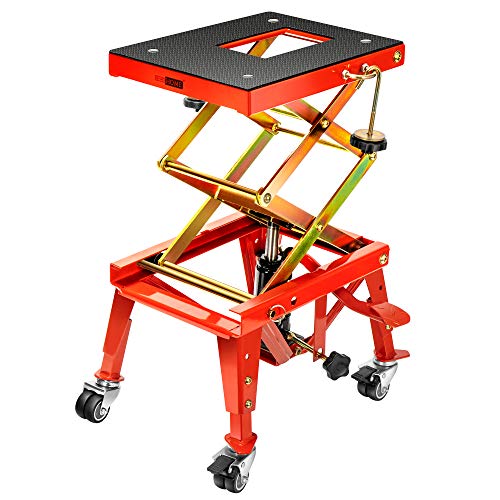
Heavy-Duty Hydraulic Motorcycle Lift Table
Professional-grade hydraulic motorcycle lift with 1,500-pound capacity and adjustable platform width. Features smooth hydraulic operation with safety lock mechanism for secure lifting of motorcycles, ATVs, and snowmobiles during maintenance work.
Key Features:
- 1,500 lb lifting capacity
- Hydraulic pump operation
- Adjustable platform width 6-18 inches
- Safety lock mechanism
- Non-slip rubber pad surface
- Lifting range 3.5 to 31 inches
- Heavy-duty steel construction
- 360-degree swivel casters with locks

Compact Air-Hydraulic Motorcycle Jack
Space-saving pneumatic motorcycle lift designed for smaller garages and workshops. Combines air and hydraulic power for effortless lifting with precise control. Ideal for routine maintenance, tire changes, and seasonal storage preparation.
Key Features:
- 1,000 lb weight capacity
- Air-hydraulic operation
- Compact footprint design
- Quick-lift pneumatic system
- Manual fine adjustment
- Safety relief valve
- Rubber contact pads
Essential Features of the OEM Tools Motorcycle Lift System
The OEM tools motorcycle lift represents a significant advancement in garage equipment technology for motorcycle enthusiasts and professional mechanics. These hydraulic systems provide the stability and precision needed for safe motorcycle maintenance and repair work.
Hydraulic motorcycle jacks utilize fluid pressure to create smooth, controlled lifting motion that eliminates the physical strain of manual lifting. The OEM tools motorcycle lift series incorporates heavy-duty steel construction with precision-engineered hydraulic cylinders that deliver consistent performance across thousands of lift cycles.
Safety features integrated into every OEM tools motorcycle lift include automatic locking mechanisms, pressure relief valves, and non-slip contact surfaces. These components work together to prevent accidental lowering and ensure your motorcycle remains secure throughout the maintenance process.
Weight Capacity and Lifting Range
Most OEM tools motorcycle lift models offer weight capacities ranging from 1,000 to 1,500 pounds, accommodating everything from lightweight sport bikes to heavy touring motorcycles and ATVs. The lifting range typically extends from ground level to approximately 30 inches, providing excellent access to undercarriage components.
The adjustable platform width on select OEM tools motorcycle lift models ranges from 6 to 18 inches, ensuring compatibility with various tire sizes and motorcycle configurations. This versatility makes these lifts suitable for multi-bike households and professional shop environments.
Hydraulic vs Manual Motorcycle Lifting Solutions
Traditional manual motorcycle lifting methods often require multiple people or risk damage to expensive motorcycle components. The OEM tools motorcycle lift eliminates these concerns through precision hydraulic control that allows single-person operation with professional results.
Hydraulic systems provide consistent lifting force regardless of the motorcycle’s weight distribution, unlike manual jacks that can become unstable with off-center loads. The smooth hydraulic action of an OEM tools motorcycle lift prevents sudden movements that could damage delicate motorcycle components or create safety hazards.
Maintenance requirements for hydraulic motorcycle lifts remain minimal compared to complex mechanical alternatives. Regular hydraulic fluid checks and occasional seal inspections keep your OEM tools motorcycle lift operating smoothly for years of reliable service.
Operational Efficiency Benefits
Professional mechanics appreciate how an OEM tools motorcycle lift reduces service time per vehicle while improving work quality. The elevated working position reduces back strain and provides better visibility for detailed maintenance tasks.
The stability provided by hydraulic lifting systems allows mechanics to work confidently on tasks requiring precise torque specifications or delicate adjustments. This improved working environment translates directly to better maintenance outcomes and increased customer satisfaction in commercial settings.
Safety Considerations and Proper Usage Guidelines
Operating any OEM tools motorcycle lift requires understanding proper safety protocols to prevent accidents and equipment damage. Always verify that the motorcycle’s weight falls within the lift’s rated capacity before attempting to raise the vehicle.
Proper positioning of the motorcycle on the lift platform ensures balanced weight distribution and stable lifting action. The OEM tools motorcycle lift should contact the motorcycle at manufacturer-recommended lift points, typically along the frame rails or designated lifting brackets.
Regular inspection of hydraulic fluid levels, seal integrity, and safety mechanisms maintains optimal performance from your OEM tools motorcycle lift. Any signs of fluid leakage or irregular operation require immediate attention to prevent potential safety hazards.
Pre-Operation Safety Checklist
Before each use, inspect the OEM tools motorcycle lift for visible damage, ensure all safety locks function properly, and verify adequate hydraulic fluid levels. The work area should remain clear of obstacles and provide sufficient overhead clearance for the lifted motorcycle.
Never exceed the manufacturer’s specified weight limits or attempt to lift motorcycles with unusual weight distributions without proper support accessories. The reliability of your OEM tools motorcycle lift depends on following these operational guidelines consistently.
Professional Installation and Workshop Integration
Integrating an OEM tools motorcycle lift into your workshop requires careful planning to maximize efficiency and maintain safety standards. Consider factors such as floor space, electrical requirements, and workflow patterns when positioning your new hydraulic lifting equipment.
The sturdy construction of OEM tools motorcycle lift models provides excellent stability on level concrete floors, though some users prefer to bolt units in place for additional security. Mobility options, including locking casters on certain models, allow flexible positioning within larger workshop spaces.
Many motorcycle service facilities integrate multiple OEM tools motorcycle lift units to handle varying bike sizes and service requirements simultaneously. This approach maximizes throughput while maintaining the specialized capabilities each lift configuration provides.
Workspace Optimization Strategies
Position your OEM tools motorcycle lift to allow 360-degree access around lifted motorcycles while maintaining clear pathways for moving equipment and parts. Adequate lighting above the lift area improves visibility for detailed maintenance work.
Consider the relationship between your OEM tools motorcycle lift and other garage equipment including diagnostic tools and lifting support equipment to create an efficient workflow pattern. The same principles that make floor jack positioning important apply to motorcycle lift placement as well.
Maintenance and Long-Term Care Requirements
Proper maintenance extends the service life of your OEM tools motorcycle lift while ensuring consistent safety and performance. Establish a regular maintenance schedule that includes hydraulic fluid changes, seal inspections, and safety mechanism testing.
Hydraulic fluid quality directly impacts lifting performance and component longevity in your OEM tools motorcycle lift. Use only manufacturer-recommended hydraulic fluids and replace according to the suggested service intervals to maintain optimal operation.
Storage considerations become important if your OEM tools motorcycle lift will experience extended periods of non-use. Proper storage procedures prevent seal deterioration and maintain hydraulic system integrity during idle periods.
Troubleshooting Common Issues
Slow lifting operation often indicates low hydraulic fluid levels or internal seal wear in your OEM tools motorcycle lift. Address these symptoms promptly to prevent more extensive damage to the hydraulic system.
Irregular lifting motion or platform instability suggests the need for professional service evaluation of your OEM tools motorcycle lift. These symptoms could indicate worn components that require replacement to maintain safe operation standards.
Just as jack stands require regular inspection for safety, your motorcycle lift benefits from systematic maintenance checks. The same attention to detail used with transmission jack maintenance applies to hydraulic motorcycle lifting equipment.
Cost-Benefit Analysis and Return on Investment
Investing in an OEM tools motorcycle lift provides both immediate operational benefits and long-term financial advantages for serious motorcycle enthusiasts and professional mechanics. The time savings alone often justify the initial equipment cost within the first year of regular use.
Professional shops report increased service capacity and improved customer satisfaction when utilizing quality motorcycle lifting equipment. The OEM tools motorcycle lift enables mechanics to complete more services per day while reducing physical fatigue and improving work quality.
The durability and reliability of OEM tools motorcycle lift models provide excellent long-term value compared to cheaper alternatives that require frequent replacement or extensive maintenance. This professional-grade equipment maintains its performance characteristics through years of regular use.
Productivity Enhancement Metrics
Maintenance tasks that previously required 2-3 hours can often be completed in half the time when using an appropriate OEM tools motorcycle lift. This efficiency improvement translates directly to increased profitability for commercial operations and more enjoyable maintenance experiences for enthusiasts.
The reduced physical strain provided by hydraulic lifting equipment decreases mechanic fatigue and reduces the risk of workplace injuries. These benefits contribute to lower insurance costs and improved employee satisfaction in professional environments.
Comparing the capabilities of an OEM tools motorcycle lift to other lifting solutions like engine hoist stand equipment reveals the specialized advantages each tool provides for specific applications.
Frequently Asked Questions
Choosing the Right OEM Tools Motorcycle Lift for Your Needs
Selecting the appropriate OEM tools motorcycle lift requires careful consideration of your specific requirements, available space, and intended usage patterns. Whether you’re a weekend enthusiast performing routine maintenance or a professional mechanic servicing multiple bikes daily, the right hydraulic lifting solution significantly improves both safety and efficiency.
The investment in quality motorcycle lifting equipment pays dividends through improved maintenance capabilities, reduced physical strain, and enhanced safety during service procedures. An OEM tools motorcycle lift transforms challenging maintenance tasks into manageable projects while providing the stability and access needed for professional-quality results.
Consider factors such as weight capacity, lifting range, platform adjustability, and available floor space when evaluating different OEM tools motorcycle lift options. The most expensive model isn’t always the best choice – select equipment that matches your actual requirements while providing room for future needs.
The reliability and performance characteristics of OEM tools motorcycle lift equipment make these units excellent long-term investments for anyone serious about motorcycle maintenance. With proper care and regular maintenance, these hydraulic lifting systems provide years of dependable service while maintaining their safety and operational characteristics.