
OEM Tools Infrared Thermometer – Non-Contact Digital Temperature Measurement
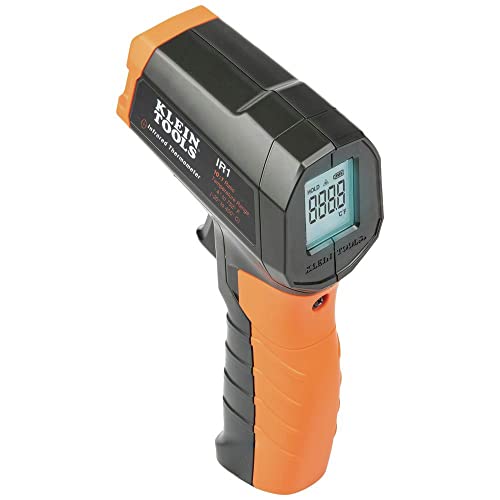
OEM Tools 24392 Non-Contact Infrared Thermometer
Professional-grade infrared thermometer featuring laser targeting and wide temperature range from -58°F to 1022°F. Ideal for automotive, HVAC, and industrial applications requiring precise non-contact temperature measurement with digital display and ergonomic design.
Key Features:
- Temperature range -58°F to 1022°F (-50°C to 550°C)
- 12:1 distance-to-spot ratio
- Dual laser targeting system
- Backlit LCD display
- Data hold and auto-shutoff functions
- Adjustable emissivity settings
- MIN/MAX/AVG temperature recording
- Durable ABS plastic construction
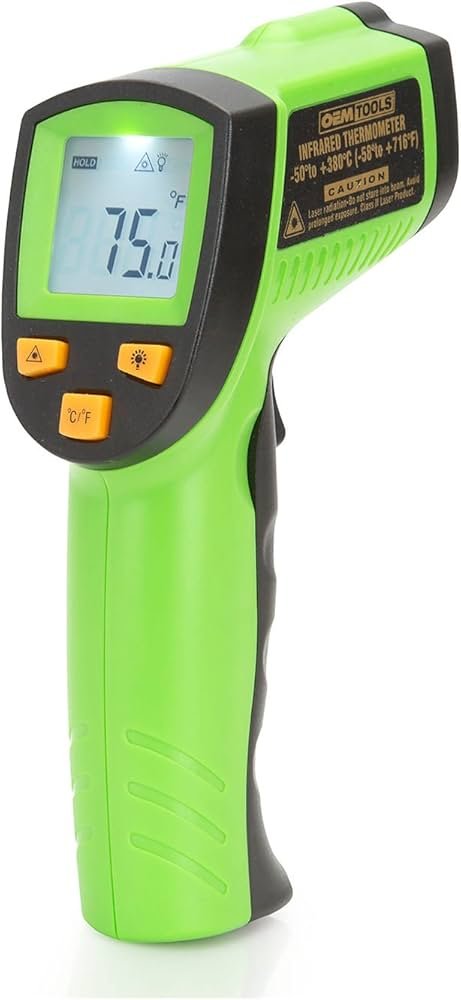
OEM Tools 24393 Professional Digital Infrared Thermometer
Advanced non-contact thermometer with expanded temperature range up to 1832°F and high accuracy ±1.5%. Features dual laser targeting, adjustable emissivity, and comprehensive data logging capabilities for demanding professional temperature measurement applications in various industries.
Key Features:
- Extended range -58°F to 1832°F (-50°C to 1000°C)
- High accuracy ±1.5% or ±3°F
- 20:1 distance-to-spot ratio
- Color-coded alarm system
- USB data logging capability
- Adjustable emissivity 0.10 to 1.00
- Tripod mounting capability
- IP54 dust and water resistance
Understanding OEM Tools Infrared Thermometer Technology
The oem tools infrared thermometer represents a significant advancement in non-contact temperature measurement technology. These precision instruments utilize infrared radiation detection to measure surface temperatures without physical contact, making them essential tools for automotive diagnostics, HVAC maintenance, and electrical troubleshooting.
Infrared thermometry works by detecting thermal radiation emitted by objects and converting this energy into accurate temperature readings. The oem tools infrared thermometer incorporates advanced sensor technology that responds to infrared wavelengths between 8-14 micrometers, providing reliable measurements across a wide temperature spectrum.
Key Technologies in OEM Tools Design
Modern oem tools infrared thermometer units feature sophisticated optical systems with precision lenses that focus infrared energy onto detector elements. The laser targeting system ensures accurate measurement point identification, while digital processing circuits convert analog signals into precise temperature displays.
The non-contact design eliminates measurement errors caused by thermal mass effects and provides safety advantages when measuring hot, moving, or electrically active surfaces. Professional technicians rely on these capabilities when working with electrical diagnostic equipment where contact measurements could be dangerous or impractical.
Professional Applications for OEM Tools Infrared Thermometers
Automotive technicians utilize the oem tools infrared thermometer for comprehensive vehicle diagnostics, including engine temperature monitoring, brake system analysis, and cooling system evaluation. These measurements help identify potential problems before they result in costly repairs or safety hazards.
HVAC professionals depend on infrared thermometry for ductwork inspection, equipment performance verification, and energy efficiency assessments. The ability to quickly scan large areas and identify temperature variations makes the oem tools infrared thermometer invaluable for system optimization and troubleshooting.
Industrial and Manufacturing Uses
Manufacturing facilities employ oem tools infrared thermometer technology for quality control processes, equipment monitoring, and preventive maintenance programs. Temperature variations often indicate wear patterns, lubrication issues, or impending component failures in industrial machinery.
Electrical maintenance requires precise temperature monitoring of connections, circuit breakers, and motor windings. The non-contact measurement capability allows technicians to safely assess energized equipment, similar to how they use specialized battery diagnostic tools for electrical system analysis.
Food Service and Safety Applications
Food service operations utilize infrared thermometry for sanitation compliance and food safety protocols. The oem tools infrared thermometer enables rapid temperature verification of cooking surfaces, storage areas, and food products without contamination concerns.
Key Features and Specifications of OEM Tools Infrared Thermometers
Distance-to-spot ratio represents a critical specification in oem tools infrared thermometer design, determining the measurement area size at various distances. Higher ratios allow precise measurements of smaller targets from greater distances, essential for accessing confined spaces or hazardous locations.
Temperature range capabilities vary among oem tools infrared thermometer models, with professional units typically measuring from -58°F to over 1800°F. This broad range accommodates applications from frozen storage monitoring to high-temperature industrial processes and automotive exhaust system analysis.
Accuracy and Response Time
Measurement accuracy in quality oem tools infrared thermometer units typically achieves ±1.5% of reading or ±3°F, whichever is greater. Fast response times under one second enable rapid scanning and real-time monitoring of dynamic temperature conditions.
Emissivity adjustment features allow compensation for different surface materials and conditions. The oem tools infrared thermometer can be calibrated for materials ranging from highly reflective metals to matte surfaces, ensuring accurate readings across diverse applications.
Display and Interface Features
Backlit LCD displays provide clear visibility in various lighting conditions, while data hold functions freeze readings for recording purposes. Advanced models include MIN/MAX/AVG recording capabilities and alarm functions for temperature threshold monitoring.
Proper Usage Techniques for OEM Tools Infrared Thermometers
Achieving accurate measurements with an oem tools infrared thermometer requires understanding proper positioning and environmental considerations. The laser targeting system should be aimed at the center of the measurement area, avoiding reflective surfaces that could cause reading errors.
Distance considerations play a crucial role in measurement accuracy, with optimal results achieved within the specified distance-to-spot ratio range. Positioning too close or too far from the target can compromise accuracy and repeatability of temperature readings.
Environmental Factors Affecting Accuracy
Ambient conditions influence oem tools infrared thermometer performance, particularly in environments with steam, dust, or other airborne particles. These conditions can absorb or scatter infrared radiation, leading to measurement errors that require compensation or alternative measurement approaches.
Surface preparation and material properties affect measurement reliability, with oxidized or painted surfaces typically providing more accurate readings than polished metals. Understanding emissivity characteristics helps technicians select appropriate settings for different materials and applications.
Calibration and Maintenance Requirements
Regular calibration ensures continued accuracy of the oem tools infrared thermometer, with professional calibration services recommended annually for critical applications. Basic field verification can be performed using ice water and boiling water reference temperatures where appropriate for the instrument’s range.
Advantages Over Traditional Contact Thermometry
Safety benefits represent the primary advantage of the oem tools infrared thermometer over contact measurement methods. Technicians can assess temperatures of energized electrical equipment, moving machinery, and hazardous materials without physical contact or safety risks.
Speed and efficiency advantages become apparent when measuring multiple points or scanning large areas. The oem tools infrared thermometer enables rapid temperature surveys that would be time-consuming and impractical with contact instruments, particularly valuable for preventive maintenance inspections.
Versatility and Accessibility
Non-contact measurement capability allows temperature assessment of inaccessible locations, irregular surfaces, and delicate materials that could be damaged by probe contact. This versatility makes the oem tools infrared thermometer suitable for applications ranging from electronic component testing to food service operations.
The ability to measure temperatures without affecting the target object eliminates thermal mass effects that can influence contact measurements. This advantage proves particularly important when measuring small components or materials with low thermal conductivity, situations where technicians might also utilize precision tools like those found with battery maintenance equipment.
Cost and Time Savings
Reduced measurement time translates to improved productivity and lower labor costs for temperature monitoring tasks. The oem tools infrared thermometer enables comprehensive temperature surveys in minutes rather than hours required for contact measurement approaches.
Selection Criteria and Model Comparisons
Temperature range requirements form the foundation for oem tools infrared thermometer selection, with specific applications dictating minimum and maximum temperature capabilities. Automotive applications typically require ranges from sub-zero to 1000°F, while industrial processes may demand higher temperature capabilities.
Accuracy specifications must align with application requirements, considering both absolute accuracy and repeatability needs. Critical processes may justify premium oem tools infrared thermometer models with enhanced accuracy specifications and calibration certificates.
Advanced Feature Considerations
Data logging capabilities become valuable for applications requiring temperature trend analysis or regulatory compliance documentation. Models with USB connectivity and computer software integration enable comprehensive temperature monitoring programs and automated data collection.
Durability and environmental protection features matter for demanding applications, with IP-rated models providing protection against dust and moisture. Professional-grade oem tools infrared thermometer units often include protective cases and accessories for field use, similar to the robust construction found in professional power tools designed for demanding applications.
Budget and Performance Balance
Cost considerations must balance initial investment against long-term value and capability requirements. Entry-level oem tools infrared thermometer models provide basic functionality for occasional use, while professional models offer enhanced accuracy, durability, and advanced features for frequent or critical applications.
Frequently Asked Questions
Maximizing Value from Your OEM Tools Infrared Thermometer Investment
The oem tools infrared thermometer represents an essential instrument for modern temperature measurement applications across automotive, HVAC, industrial, and safety sectors. Understanding proper selection criteria, usage techniques, and maintenance requirements ensures maximum value from these precision instruments while maintaining measurement accuracy and reliability over time.
Professional applications demand reliable temperature measurement capabilities that only quality oem tools infrared thermometer units can provide. The combination of safety, speed, and accuracy makes these instruments indispensable for preventive maintenance programs, diagnostic procedures, and quality control processes where contact measurement methods prove inadequate or dangerous.
Investment in appropriate oem tools infrared thermometer technology pays dividends through improved efficiency, enhanced safety, and reduced maintenance costs. Whether used alongside other diagnostic equipment like professional lighting solutions or emergency power equipment, these instruments form part of a comprehensive toolkit for professional technicians and maintenance personnel.
Selecting the right oem tools infrared thermometer model requires careful consideration of application requirements, environmental conditions, and performance specifications. Professional guidance and proper training maximize the value of these sophisticated instruments while ensuring accurate, reliable temperature measurements that support critical decision-making processes across diverse industries and applications.