

OEM Tools Hub Puller & Wheel Bearing Tool Kit
We designed this hub puller and wheel bearing tool kit to handle the toughest removal and installation jobs in your shop. This comprehensive set functions as both an OEM Tools wheel stud installer and complete bearing service solution, eliminating the need for multiple single-purpose tools.
The kit includes forcing screws, slide hammers, and adapters sized for domestic and import vehicles. Our engineers selected heat-treated steel components that withstand repeated high-torque applications without bending or stripping threads. Whether you're pressing in new wheel studs, extracting seized bearings, or servicing front-wheel-drive hubs, this kit delivers the leverage and precision professional technicians demand.
- Heat-treated steel forcing screws and adapters resist wear during high-torque applications
- Slide hammer assembly with ergonomic grip for controlled impact force
- Multiple adapter sizes fit domestic and import hub configurations
- Puller plates accommodate various bolt circle patterns
- Includes wheel stud installer components for press-fit and threaded applications
Tool Components & Construction
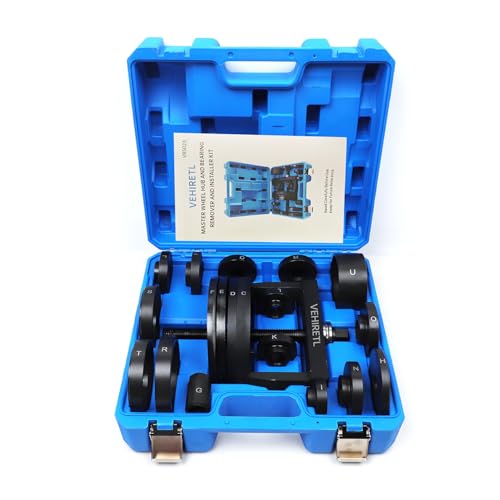
The kit contains 14 precision-machined pieces that cover the full spectrum of hub and bearing service work. We include three forcing screw lengths to reach recessed hubs on trucks and SUVs where access is limited by suspension components.
Our slide hammer features a hardened steel shaft with sealed bearings that maintain smooth operation after thousands of impacts. The rubber grip absorbs shock and prevents hand fatigue during extended removal sessions. Each adapter threads onto the forcing screws with fine-pitch threads that distribute stress evenly across the connection point, preventing the stripped threads common with lower-grade tools.
Wheel Stud Installation Applications
Press-Fit Stud Replacement
When replacing damaged wheel studs on vehicles with press-fit designs, the included installation adapters thread onto the forcing screw to pull new studs into the hub. We sized the adapter bores to support the stud shank without damaging threads during installation. The forcing screw provides controlled pressure that seats studs squarely in their bores, preventing the misalignment that causes premature stud failure.
Threaded Hub Service
For vehicles with threaded wheel studs, the same forcing screw assembly extracts damaged studs by threading onto the stud end. The puller plate bridges the hub face, and turning the forcing screw generates the extraction force needed to break corrosion bonds. This eliminates the hammering and drilling that risks hub damage when studs seize in their threads. The kit works equally well on rear drum brake hubs and front disc brake applications where space constraints make traditional pullers ineffective.
Hub & Bearing Removal Techniques
Pressed wheel bearings require precise extraction force applied through the bearing’s inner race. We include multiple pilot adapters that insert through the bearing bore and contact the inner race directly, preventing the damage that occurs when extraction force loads the outer race or cage. The forcing screw threads through the pilot, and the slide hammer delivers the sharp impact force needed to break the press fit.
For front-wheel-drive hubs with integrated bearing units, the larger puller plates span the bolt circle and distribute extraction force evenly across the hub flange. This prevents the cracking and distortion that happens when force concentrates at individual bolt holes. Our design is compatible with the specialized adapters used in pulling and pressing tool applications across the automotive service spectrum.
Complete Your Pulling & Pressing Tool Collection


What people are saying
Hub Puller & Wheel Bearing Kit Questions
Yes, the kit includes adapters and forcing screws sized for both front and rear wheel stud installation on passenger vehicles and light trucks. The adapter bores accommodate standard stud shank diameters from 0.5 to 0.625 inches, covering the vast majority of automotive applications.
For press-fit studs, the installation adapters thread onto the forcing screw and pull new studs into the hub bore. For threaded applications, the same components extract damaged studs by threading onto the stud end and applying controlled pulling force.
The kit works on domestic and import passenger cars, light trucks, and SUVs manufactured from the 1980s through current models. The adapter set covers bolt circle patterns from 4x100mm through 6×5.5 inches, which includes vehicles from manufacturers like Honda, Toyota, Ford, Chevrolet, Dodge, and Nissan.
We include both metric and SAE forcing screw threads to match the hub threading standards used across different vehicle platforms. Heavy-duty trucks over one-ton capacity may require larger forcing screws not included in this kit.
The slide hammer weight and shaft length are designed to deliver approximately 150 to 200 foot-pounds of impact force per stroke when operated correctly. This is sufficient to break the press fit on most passenger vehicle wheel bearings and hub assemblies.
For extremely stubborn bearings, you can combine slide hammer impacts with steady pulling force from the forcing screw. The hardened steel shaft withstands repeated high-impact use without bending, and the sealed bearings maintain smooth operation through thousands of extraction cycles.
The kit includes all components needed for hub pulling and wheel stud installation. You'll need basic hand tools like wrenches and sockets to remove wheel assemblies and access hubs, but no specialized pullers or presses beyond what's in the kit.
For some applications, a rubber mallet helps seat adapters fully into bearing bores before applying extraction force. An air hammer attachment point on the slide hammer allows powered operation if you prefer, but hand operation provides sufficient force for most jobs.
Yes, the kit includes pilot adapters and forcing screws specifically designed for front-wheel-drive bearing extraction. The pilots insert through the bearing bore and contact the inner race directly, applying extraction force to the correct bearing component.
For integrated hub-bearing units common on modern FWD vehicles, the larger puller plates span the bolt circle and distribute force evenly across the hub flange. This prevents cracking and distortion while generating the significant force needed to break the press fit on these heavy assemblies.
Clean all components after each use with brake cleaner or degreaser to remove accumulated grease and road grime. Spray threaded components with penetrating oil before storage to prevent corrosion.
Inspect forcing screw threads and puller plate holes monthly for damage or deformation. The precision-ground threads will show visible wear before they fail completely. Replace any components that show cracks, thread damage, or permanent deformation. The slide hammer requires no lubrication beyond factory-sealed bearings, which should last 10-plus years under normal shop use.
The blow-molded case with custom foam inserts is designed for professional mobile service environments. The case latches withstand repeated opening and closing in demanding shop conditions, and the reinforced corners protect contents during transport.
The handle design allows comfortable one-handed carry even when fully loaded. Labeled foam cavities make it easy to identify missing components after jobs, reducing lost tool costs. Many mobile technicians store this case in their service trucks alongside ball joint tools and other essential equipment without durability concerns.