OEM Tools Transmission Jack vs Hub Puller: Which Heavy Lift Tool Do You Actually Need?
Walk into any professional shop and you’ll find both transmission jacks and hub pullers hanging on the wall—but ask ten techs which one they reach for more often and you’ll get ten different answers. The confusion makes sense: both handle heavy components that won’t budge by hand, both prevent back injuries, and both cost enough that buying the wrong one first stings. The transmission jack vs hub puller question isn’t about which tool is better—it’s about which job you’re actually doing.
We build both tools, and we see this question come up constantly from new shop owners and home mechanics upgrading from floor jacks and hammers. The short version: a transmission jack is a specialized hydraulic lift for removing and installing transmissions, transfer cases, and differentials; a hub puller is a mechanical press system for extracting pressed-fit wheel hubs, bearings, and axle components. One moves 200-pound assemblies safely into position, the other breaks interference fits that would otherwise require a torch. Here’s how to figure out which one your shop needs first.
What a Transmission Jack Actually Does (and Doesn’t Do)
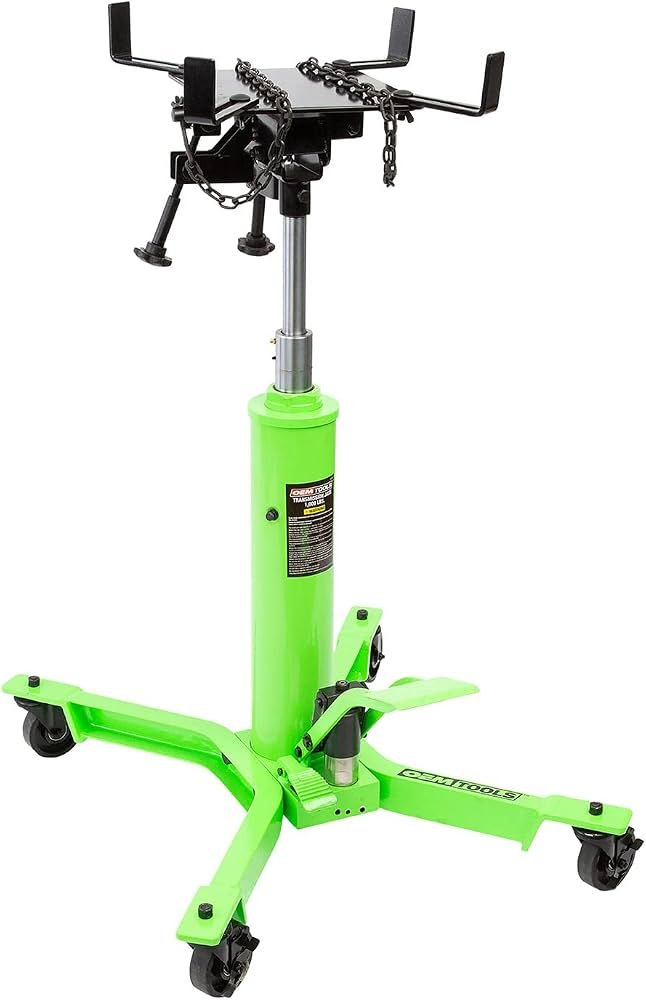
A transmission jack is a hydraulic lift cart purpose-built for one task: supporting a transmission’s weight and positioning it precisely during removal or installation. Most units handle 500 to 1,000 pounds, with a wide saddle that cradles the transmission pan and adjustable arms that tilt the assembly forward or back to clear the bellhousing angle.
The critical feature is controlled vertical travel—you’re lowering a 200-pound cast-iron block inch by inch while keeping it level, then reversing that process to mate it back to the engine without cross-threading bolts. A floor jack can lift the weight, but it can’t tilt, rotate, or hold position while you bolt up six different mounting points.
Where Transmission Jacks Fall Short
Transmission jacks do nothing for stuck components. If a wheel hub is seized onto the spindle or a bearing race won’t press out of the knuckle, the jack just sits there—it has no mechanical advantage for breaking interference fits. We’ve watched techs try to rig a transmission jack as a press, and it ends with a bent saddle and the same stuck hub. That’s where the hub puller’s job starts.
When You Need a Hub Puller Instead
Breaking Pressed Fits Without a 20-Ton Press
A hub puller—also called a hub and bearing puller or slide hammer puller kit—uses threaded force or impact to extract components pressed into place at the factory. Wheel hubs, wheel bearings, axle seals, and inner bearing races all use interference fits measured in thousandths of an inch, and those fits corrode into place after years of road salt and heat cycles.
Our hub puller and wheel bearing tool kit includes both threaded screw-type pullers and slide hammer attachments because different jobs need different mechanical advantage. A threaded puller applies steady, even force—ideal for hubs that will come out cleanly once you overcome the initial break-loose threshold. A slide hammer delivers repeated impacts, which work better on corroded bearings where you’re essentially shocking the rust bond apart rather than pulling smoothly.
What Hub Pullers Can’t Replace
Hub pullers have zero vertical lift capacity. They’re designed to pull components toward you off a spindle or out of a bore, not to hold anything overhead or support weight during installation. Trying to use a slide hammer to lift a differential is how you end up with a broken tool and a crushed foot.
Which Tool Your Shop Should Buy First
If you’re running a general repair shop or doing regular suspension and drivetrain work, the hub puller comes first—specifically a comprehensive kit with both screw-type and slide hammer components, plus a range of jaw sizes and puller plates. Wheel bearing jobs come through the door constantly, especially in rust-belt states, and sending those jobs out because you can’t extract a $40 bearing costs you the labor margin every single time.
Transmission jacks are a second-tier purchase unless you specialize in transmission work or regularly handle four-wheel-drive transfer case swaps. For the occasional transmission job, a quality low-profile floor jack and a helper can get the unit out—it’s awkward and slower, but it’s not impossible. A seized hub with no puller, on the other hand, stops the job completely. You can’t hammer it out without destroying the spindle threads, and rental pullers from the auto parts store are usually missing half the adapters you need.
The Exception: High-Volume Transmission Shops
If you’re doing three or more transmission removals a week, the jack pays for itself in the first month through reduced labor hours and eliminated comeback injuries. Transmission work without a dedicated jack averages 30-45 minutes longer per job, and the risk of dropping a unit mid-install is high enough that most insurance carriers consider it a liability issue. In that scenario, the jack becomes the first purchase and the hub puller moves to second.
Tool Capacity and Sizing: Matching the Spec to the Job
Transmission jacks are rated by maximum lift capacity—typically 500 lb, 1,000 lb, or 1,500 lb for heavy-duty diesel applications. The SAE J2217 standard defines load capacity testing procedures, but the real-world number you care about is saddle width and tilt range. A standard saddle runs 16 to 20 inches wide, which fits most passenger-car and light-truck transmissions; larger units for HD trucks can hit 24 inches.
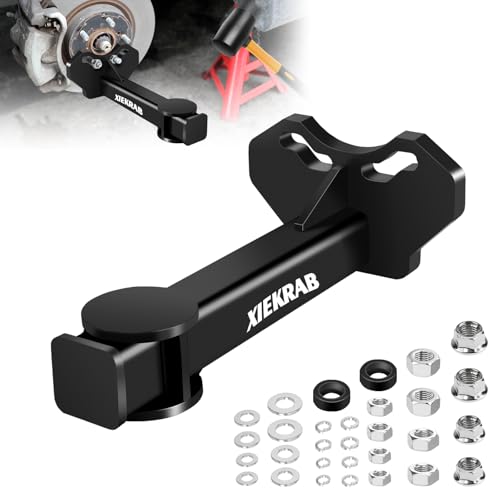
Hub pullers are sized by jaw spread and bolt thread size. A typical automotive kit covers 2-inch to 6-inch jaw spreads and includes metric and SAE threaded adapters. The limiting factor is usually the center bolt diameter—if you’re working on heavy-duty truck hubs, you’ll need a puller with a 1-inch center screw or larger, because the forces required to break a 3/4-ton hub loose exceed what a 5/8-inch bolt can handle without stripping threads.
Choosing the Right Lift Tool for Your Shop’s Real Workload
The transmission jack vs hub puller decision comes down to workload frequency, not capability. Both tools solve problems that can’t be worked around with general-purpose equipment, but hub and bearing work shows up in every shop every week, while transmission removals are cyclical unless you specialize. Start with a comprehensive hub puller kit that includes slide hammer and screw-type components, then add the transmission jack once your monthly transmission count justifies the investment.
If you’re equipping a new shop from scratch, budget for both eventually—but the hub puller pays back faster through eliminated outsourced jobs and faster turnaround on suspension work. The transmission jack is a quality-of-life and safety upgrade that becomes essential once your volume supports it, not a tool you can improvise your way around long-term.
Common Questions About Transmission Jacks and Hub Pullers
Yes—transmission jacks work well for lowering and installing differentials, transfer cases, and even engine blocks if you add a custom saddle adapter. The key is that the component needs to be heavy, awkward, and require precise positioning. Using one for lighter work like exhaust removal is overkill and ties up an expensive tool.
Two-jaw pullers are more compact and fit into tighter spaces, which matters when you’re working around brake calipers and suspension arms. Three-jaw pullers distribute force more evenly and are less likely to cock the hub sideways during extraction, but they require more clearance. Most professional kits include both configurations so you can switch based on the job.
Absolutely—low-profile jacks are essential for lowered vehicles, sports cars, and anything with minimal ground clearance. A standard transmission jack sits too tall to fit under a Corvette or a slammed truck, and you’ll spend twenty minutes jacking the vehicle higher instead of just starting with the right tool. Low-profile units sacrifice a few inches of maximum lift height, but for 90 percent of passenger-car work that trade-off is invisible.
Slide hammers excel at breaking loose corroded or rusted fits where steady pull alone won’t work—the repeated impacts shock the corrosion bond apart. Screw-type pullers are better for clean, dry fits where you just need sustained force to overcome the press-fit interference. If you’ve soaked the hub in penetrating oil overnight and it still won’t budge with a screw puller, switch to the slide hammer.
You can, but it requires a helper and a floor jack, and the risk of the transmission slipping off the jack saddle mid-removal is high. Two-post lifts give you better access than working on the ground, but they don’t eliminate the need for controlled lowering and tilting. Most techs who try it once buy a transmission jack immediately after.
Not centering the puller jaws evenly on the hub face—if one jaw catches the edge and the other two sit flush, you’ll cock the hub sideways and either strip threads or crack the casting. The second mistake is not backing out the center bolt far enough before tightening the jaws, which leaves you with no pull travel once the jaws are set. Always start with the center bolt fully retracted.