
OEM Tools 27110 vs Standard Oxygen Sensor Socket: Which Design Handles Tight Engine Bay Clearances Best?
Removing oxygen sensors in modern engines often means working around heat shields, exhaust manifolds, and harness connectors in spaces barely wide enough for your hand. The socket you choose determines whether the job takes five minutes or an hour of scraped knuckles and broken wires.
We designed the Oxygen Sensor Socket 27110 with a wire-clearance slot and thin-wall construction specifically for those tight spots where a standard six-point socket either won’t fit or forces you to disconnect the sensor harness first. This guide walks through the differences that matter when you’re deciding which oxygen sensor socket belongs in your toolbox.
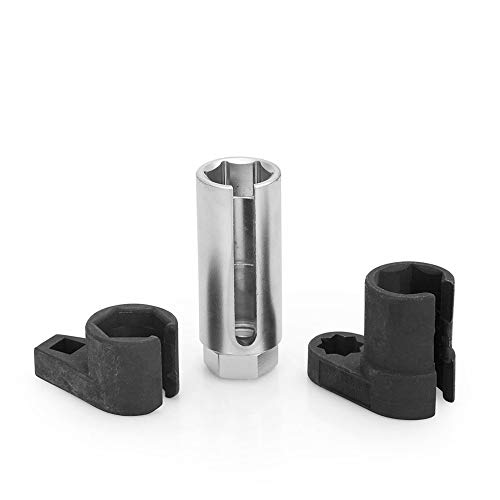
Wire-Clearance Slot: When It Matters and When It Doesn't
A slotted oxygen sensor socket lets you slide the tool over the sensor body without disconnecting the electrical plug first. The 27110 slot measures wide enough to accommodate four-wire wideband sensor connectors, not just the single-wire heated sensors found on older vehicles.
Standard hex sockets work fine if you’re replacing the sensor anyway and plan to cut the old wire. But on diagnostic jobs where you’re removing and reinstalling the same sensor to access a stuck bolt or check thread condition, leaving the connector attached saves time and eliminates the risk of breaking the brittle plastic locking tab. On sensors mounted above the catalytic converter, that tab often becomes so heat-cycled that even careful disconnection snaps it.
Wall Thickness and Nut-Face Engagement
The 27110 uses thinner walls than a conventional deep socket to fit into recessed bung installations common on V6 and V8 exhaust manifolds. Where a standard 7/8-inch socket measures roughly 1.1 inches across the flats, our design holds that dimension to 0.95 inches while maintaining the same internal hex.
That quarter-inch difference determines whether the socket clears the manifold casting or fouls before you achieve full engagement on the sensor hex. Partial engagement under torque rounds off the sensor nut, turning a routine job into an extraction with a pipe wrench. The ISO 6789 standard for hand torque tools assumes full socket engagement; anything less invalidates the calibrated torque reading and risks overtightening the new sensor into the aluminum threads.
Hex Size Compatibility Across Sensor Generations
Oxygen sensors use either 7/8-inch (22mm) or 18mm hex flats depending on manufacturer and model year. The 27110 matches the 7/8-inch standard found on most domestic and Asian vehicles from the mid-1990s forward, including all current GM, Ford, Chrysler, Toyota, and Honda applications.
European vehicles more commonly spec the 18mm size, particularly on VAG group engines and newer BMW inline-sixes. A single socket won’t cover both—the size difference is enough that using the wrong one rounds the nut immediately under torque. If you work on a mixed fleet, you’ll need both sizes regardless of whether you choose slotted or solid sockets.
Material and Torque Capacity
Chrome vanadium construction in the 27110 handles the 30-40 lb-ft installation torque spec for most sensor applications without flexing. Some techs prefer impact-rated sockets for seized sensors, but impact guns risk cracking the ceramic insulator if the sensor binds partway out.
We’ve found that a careful combination of penetrating oil, heat from a small torch applied to the bung (not the sensor body), and steady hand torque removes even badly corroded sensors without damage. If the bung threads strip, you’re installing a thread-repair insert regardless of extraction method—the impact socket sets we offer include the heavier wall construction for those situations where hand torque isn’t enough.
Offset and Extension Compatibility for Manifold Access
Downstream sensors (post-cat) usually install vertically or at a shallow angle with enough room to swing a ratchet. Upstream sensors on the manifold often point straight back toward the firewall, requiring a wobble extension or flexible head to get any purchase at all.
The 27110’s 3/8-inch drive accepts any standard extension or universal joint. We’ve used it with a 6-inch wobble extension on Subaru boxer engines where the sensor sits behind the engine block, accessible only from below with the car on a lift. The slot orientation doesn’t restrict rotation as long as you keep the harness routed through it during the entire turn—letting the wire pop out mid-removal usually means starting over after the connector snags on something.
Clearance on Turbo and Supercharged Installations
Forced-induction engines pack even more hardware into the same space. Turbo exhaust manifolds often locate the pre-turbo sensor inside a heat shield barely larger than the sensor itself, with the wastegate actuator or oil-feed line immediately adjacent.
A bulky socket fouls on surrounding components before you can get the tool seated. The 27110’s reduced outer diameter clears most of those installations; the few exceptions we’ve encountered involved custom turbo kits with aftermarket manifolds that didn’t follow OEM sensor-bung placement. Specialty truck accessories like the options at Retrax sometimes share similar clearance-driven design priorities—engineering around existing space constraints rather than assuming unlimited room.

Thread Protection During Installation and Removal
Oxygen sensor bungs thread into cast-iron manifolds or thin-wall stainless exhaust tubing. Cross-threading during installation strips either the sensor threads (replaceable) or the bung threads (major repair). The 27110’s hex engagement is tight enough to keep the socket square to the sensor during the first few turns when alignment matters most.
Standard sockets with looser internal tolerances let the sensor wobble slightly as you start threading it in. That wobble is enough to catch one thread wrong, and once you’ve applied torque to a cross-threaded sensor, the aluminum body galls into the steel bung threads and locks solid. Extracting it then requires drilling out the sensor body and chasing the bung threads with a tap—a half-hour repair turns into a three-hour ordeal.
We also see mechanics over-torque sensors because they’re using the socket as a cheater bar rather than a proper torque wrench. The 27110’s handle length is deliberately short to discourage that; if you need more leverage, the threads are probably damaged and forcing it won’t help.
Matching Socket Design to Your Actual Work Conditions
The choice between the OEM Tools 27110 and a standard oxygen sensor socket comes down to the jobs you do most often. If you’re running a production shop where speed and connector preservation matter, the slotted design pays for itself in time saved on the first dozen sensors. If you’re mostly replacing failed sensors on older vehicles with plenty of room, a solid socket works fine.
We built the 27110 for the modern engine bays where a standard socket either won’t fit or forces you into extra steps that double the job time. Keeping your tools organized with solutions from our magnetic tray and socket storage systems ensures the right tool is always within reach when clearance gets tight.
Common Questions About Oxygen Sensor Socket Design and Fit
You can if you’re comfortable disconnecting the sensor harness first and if your engine bay provides enough clearance for the thicker walls of a conventional socket. Most techs find the slotted design faster on diagnostic work where you’re reinstalling the same sensor, since you avoid the risk of breaking the connector tab during removal.
Not at oxygen sensor installation torques. The 27110 slot removes material on one side, but the remaining wall thickness and chrome vanadium construction still exceed the strength needed for 30-40 lb-ft specs. If you’re applying enough force to flex the socket, you’re likely damaging the sensor threads.
Yes, if you work on both domestic/Asian and European vehicles. The size difference is large enough that using the wrong socket immediately rounds the hex flats. Most single-brand shops can get by with one size; mixed-fleet techs need both.
The 27110 is designed for hand-torque use. Impact guns risk cracking the ceramic insulator if the sensor binds partway out of the threads. For badly seized sensors, penetrating oil and careful hand torque with a breaker bar are safer than impact removal.
Route the harness fully through the slot before you start turning, then keep light tension on the connector end so the wire stays centered in the slot throughout the rotation. If the connector snags on a nearby component, stop and reposition rather than forcing it.
Yes. The 27110 slot width accommodates the wider four-wire connectors found on wideband air-fuel ratio sensors, not just the narrower single-wire and two-wire heated sensor plugs.